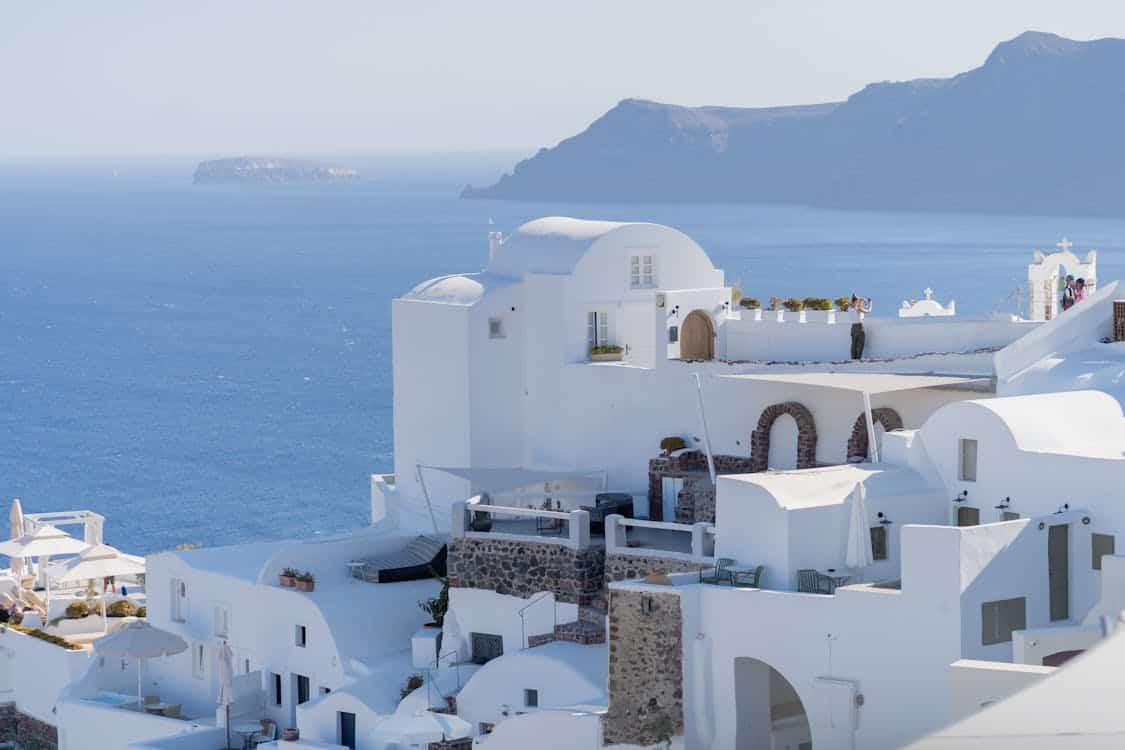

Greece broke its own tourism record in 2025, welcoming 37.98 million visitors – a 5.6% jump over the previous year. For a country still rebuilding after a decade of economic crisis, those numbers look like salvation. But in Athens, Santorini, and Mykonos, the people who actually live there are starting to see the cost.
For digital nomads who have built their lifestyle around the freedom to work from island cafés and Athens rooftop apartments, the landscape is shifting faster than most expected.
The Housing Squeeze
Athens mayor Haris Doukas was blunt at a city event this spring: “We must not become Barcelona.” He was talking about capping new hotel construction in saturated districts, but the deeper problem is what happens to residential housing when every spare room becomes a short-term rental.
Since October 2025, Athens has frozen all new Airbnb-style licenses in its three central municipal districts – Plaka, Koukaki, Kolonaki, Exarchia, and surrounding neighborhoods. The freeze runs through December 2026. Fines for illegal rentals now start at 5,000 euros and climb to 20,000 euros for repeat violations. Properties caught operating without proper registration face penalties worth 50% of their gross income, with a minimum 20,000-euro hit for first offences.
The crackdown is not limited to the capital. Thessaloniki joined the freeze in March 2026, becoming the first city outside Athens with new registration suspensions. The government is actively considering similar measures for Santorini, Mykonos, Paros, Chania on Crete, and Halkidiki.
A new spatial planning proposal from the Ministry of Environment and Energy would cap short-term rental numbers in high-demand island zones and include them in official tourism capacity calculations alongside hotels.
Why Digital Nomads Get the Blame

The backlash is not just about tourists on two-week holidays. Digital nomads – remote workers from wealthier countries who settle in Greek cities for months at a time – have become a specific target. Unlike holiday renters who come and go, nomads sign medium-term leases, often at rates locals cannot match.
Urban sociologist Dimitris Pettas, who has studied the Athens housing market extensively, explained the dynamic in a 2023 analysis that still rings true today. Foreign remote workers, particularly from the US, Israel, and Western Europe, moved to Greece during the pandemic when they could work from anywhere. Their purchasing power, combined with the golden visa program that sold residency for property investment, pushed central neighborhood rents beyond what Greek working-class families could afford.
The result? A house ownership rate that was once among Europe’s highest – over 70% – is now declining. The housing cost overburden rate has climbed past 32%, one of the highest in Europe. Public servants posted to tourist islands, including doctors and teachers, cannot find affordable housing and either quit or request transfers elsewhere.
The Regulatory Response
Greece’s short-term rental framework, built on Law 4446/2016 and updated by Laws 5073/2023 and 5170/2025, now requires every host to register with the Independent Authority for Public Revenue and obtain a Property Registration Number before listing on any platform. Safety standards include liability insurance, fire extinguishers, smoke detectors, and pest control documentation. The climate resilience fee, introduced in 2025, jumped 433% from 1.50 euros to 8 euros per night in high season.
Perhaps most significantly, the EU’s Regulation 2024/1028 took full effect on 20 May 2026, requiring platforms like Airbnb and Booking.com to verify AMA registration numbers and remove listings without valid codes. Monthly data reporting to Greek authorities is now mandatory, making it effectively impossible to operate under the radar.
Andreas Chiou, president of the Panhellenic Association of Property Managers, pushed back hard last year: “New taxes and regulations are making it impossible for us to compete with neighboring countries.” But Tourism Minister Olga Kefalogianni defended the measures, stating the goal is “the long-term, sustainable and high-quality development of Greek tourism, not just breaking records every year.”
What This Means for Remote Workers
The 2026 regulatory environment still allows short-term rentals in most of Greece – islands, coastal areas, and suburbs remain largely open. But the message from central government and local residents is clear: the era of unchecked expansion is over.
The question nomads now face is whether Greece will remain the bargain it once was. With registration costs, safety compliance, climate fees, and potential caps on rental nights, the economics of extended stays are tightening. For locals, that is precisely the point. The goal is not to end tourism or remote work, but to ensure that the people who live in these places year-round can still afford to do so.
Mayor Doukas told Euronews there are practices abroad that Greece does not need to reinvent. Capping short-term rentals and hotel growth in saturated areas is standard policy in Barcelona, Amsterdam, and other overtourism hotspots. The difference is that Greece is implementing these limits while tourism is still growing, not after the damage is done.
For anyone planning a Greek island workation in 2026, the advice is simple: check the registration status of any rental, expect higher costs in regulated zones, and understand that the locals who serve your coffee and clean your apartment may be the same people being priced out of their own neighborhoods. The work-or-pleasure choice is still yours. The consequences of that choice, however, are now harder to ignore.