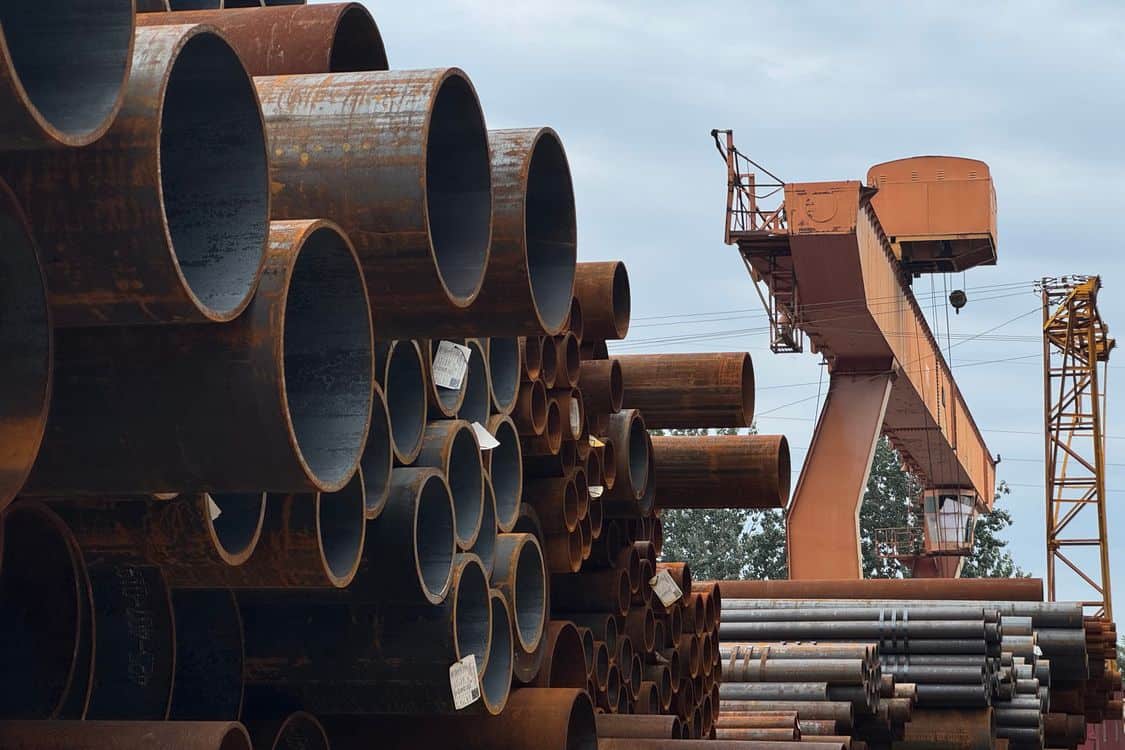
A major September 2026 award for Brazil’s Sepia 2 project shows the scale at which line-pipe decisions shape a subsea development. Vallourec will supply Subsea7 with about 130 kilometres of seamless carbon-steel pipe for rigid risers and flowlines. The order covers more than 15,000 tonnes for a system serving 15 wells in water depths of roughly 2,170 metres.
The project adds two demanding features to that volume: sour-service conditions and thermal insulation. Vallourec said the pipe would be manufactured in Brazil and described the package as 130 kilometres of line pipe.
API 5L is only the procurement baseline
API 5L establishes core requirements for pipeline products, including dimensions, grades, manufacturing routes, testing and marking. A deepwater flowline order still needs project-specific controls. Wall thickness, dimensional tolerances, toughness, weldability, sour-service performance and coating compatibility must work together across fabrication and installation.
Rigid risers and flowlines also face combined loading that an ordinary onshore specification may not capture. Pipe can be reeled, bent, welded and exposed to external pressure before production begins. Qualification must consider the full manufacturing and installation sequence, not just the properties recorded when the pipe leaves the mill.
Thermal performance is part of flow assurance
At more than two kilometres below the surface, cold seawater can cool produced fluids rapidly. Insulation helps keep the fluid above temperatures where wax or hydrates could restrict flow. That makes the bond between pipe, field joint and insulation system an operating concern rather than a finishing detail.
The Sepia 2 order is a reminder that large API 5L packages are engineered systems. Consistent metallurgy supports welding, controlled geometry supports installation, and verified sour-service properties support long-term integrity. When those requirements are defined together, the pipe specification becomes a practical tool for managing project risk rather than a simple grade label.
Sour-service qualification begins with a realistic environment. Hydrogen sulfide exposure, carbon dioxide, chlorides, temperature and pressure all influence the materials assessment. Testing conditions should represent the project rather than a generic severe environment that may be unnecessarily restrictive or, worse, a mild condition that misses the actual cracking risk.
Dimensional control becomes especially visible during offshore fabrication. Variations in diameter, wall thickness, out-of-roundness and end geometry can affect fit-up, automated welding and inspection. Across thousands of joints, a small loss of consistency can translate into slower production and more repairs at the spoolbase.
Traceability must survive multiple operations
Line pipe may pass through coating, insulation, end preparation, welding and field-joint application before installation. Each step needs a way to preserve the link between the joint and its manufacturing records. Digital tracking can help, but the identification method must remain readable and reliable through handling and surface preparation.
Quality records should connect chemical composition, mechanical tests, nondestructive examination and dimensional results to the delivered pipe. Repair rules and concession procedures should be settled before production. That allows the project team to evaluate an exception against known criteria rather than making a rushed decision while a fabrication line is waiting.
Large orders also reward early coordination between the mill and installer. Welding trials, bending or reeling simulations, coating qualification and logistics planning can expose incompatible assumptions before full production. On a 130-kilometre package, preventing a repeated issue is far more valuable than efficiently documenting it after thousands of tonnes have been made.
Logistics deserve the same attention. Pipe ends, coatings and identification marks must survive storage, loading, ocean transport and movement through the fabrication yard. Handling procedures should specify approved lifting equipment, stacking arrangements and damage-reporting rules. A joint that arrives with a damaged bevel or coating can interrupt an otherwise efficient production sequence.
Project teams should also agree on data handover. Final manufacturing records, weld information and installation identifiers will support later integrity assessments. Organizing that information around individual joints gives the operator a usable asset record instead of a collection of certificates that is difficult to connect to the installed pipeline.