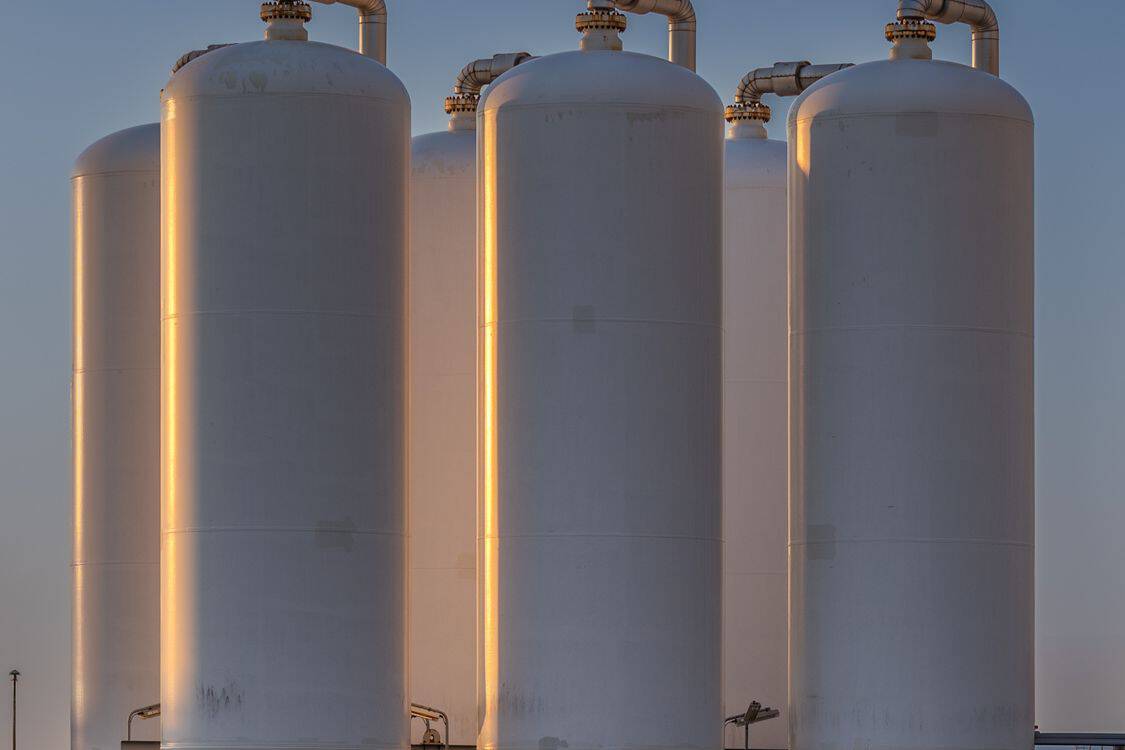
Every fall, natural gas utilities in colder climates run the same calculation: how much peak-day demand will the system see this winter, and does existing storage and natural gas tank infrastructure cover it. For 2026, the answer at several Pennsylvania utility operations has been to keep building. The newest addition came online just months before the season it’s meant to protect.
UGI Energy Services commissioned its Carlisle LNG facility on November 25, 2025, cutting it close to winter but landing in time to add real capacity heading into the coldest stretch of the year.
How peak-shaving storage actually works
The mechanics are straightforward in concept even though the engineering is demanding. Natural gas gets cooled to roughly -260°F for liquid storage, which reduces its volume 600 times compared to gaseous state. That’s what makes it possible to store meaningful reserves in a tank footprint that would be impossible for gaseous storage at the same scale. When demand spikes on the coldest days, the liquid warms back to gas and gets injected into the pipeline to cover the shortfall between typical supply contracts and peak-day demand.
UGI’s Temple LNG facility, the flagship of its peak-shaving network, stores over 15 million gallons of LNG, the equivalent of 1.25 billion cubic feet of natural gas, and can deliver up to 205,200 dekatherms per day when called on. That single facility has been operating for more than 50 years.
The new additions tell a growth story
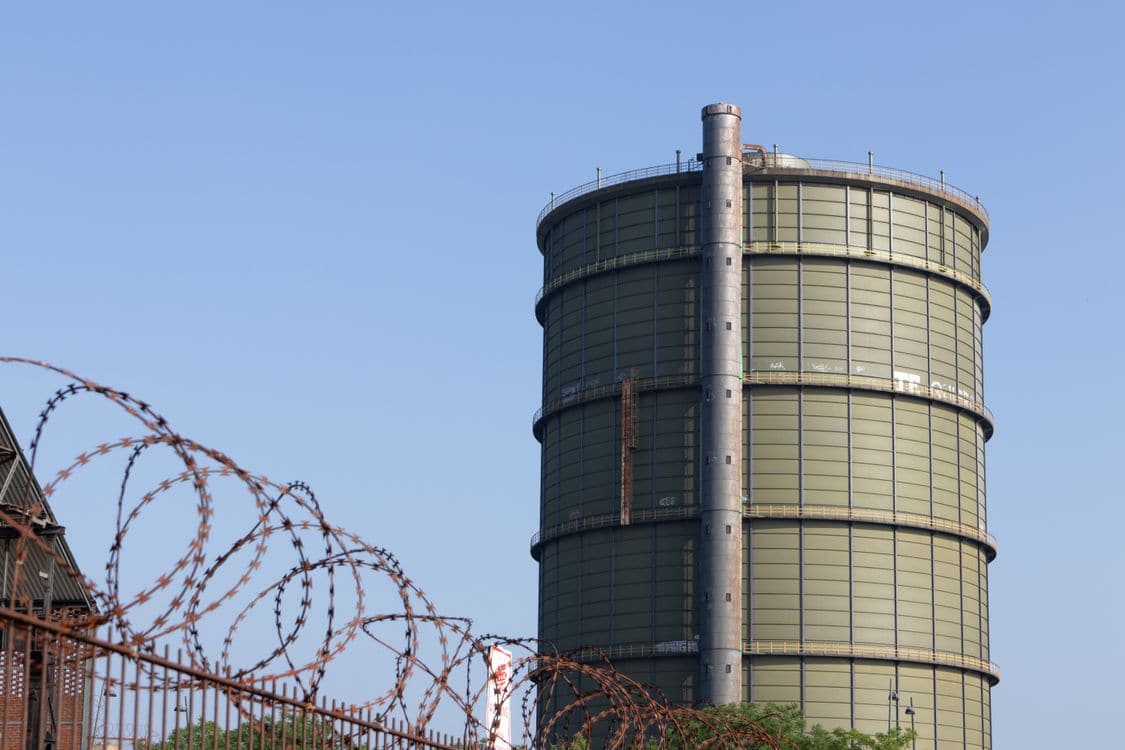
Carlisle LNG adds 4 million gallons of storage capacity to the network. It follows Steelton LNG, commissioned in 2017 with 2 million gallons and up to 70,000 dekatherms of daily delivery, and Bethlehem LNG, completed in 2020 with a matching 2-million-gallon capacity and similar daily delivery ceiling.
Three new facilities added to the network in under a decade, each responding to the same pressure: demand keeps growing faster than existing infrastructure was sized for. Winter 2025-2026 forecasts pointed to temperatures running roughly 5 percent colder than the prior winter, alongside natural gas demand growth projected at more than 5 percent through 2026. Two numbers moving the same direction at the same time, exactly the scenario this infrastructure exists to buffer against.
Why this matters beyond one utility’s territory
UGI’s build-out pattern isn’t unique to Pennsylvania. Utilities across colder regions are running similar math, and the facilities coming out of it, insulated cryogenic tanks, redundant instrumentation, integrated boil-off gas recovery, are converging on similar design standards regardless of which company is building them.
The basic engineering has been proven for decades at facilities like Temple LNG. What’s changing is the pace of new construction, driven by demand growth that shows no sign of slowing and winters utilities can no longer assume will be mild enough to skip the extra capacity.
Not all peak-shaving LNG storage is built to the same standard, and the difference matters most on the coldest days, when a failure isn’t a minor inconvenience but a real reliability risk downstream. Redundant instrumentation is one area where design choices diverge. Facilities pairing dual servo gauges with radar level measurement have a genuine backup if one system drifts, rather than a single point of failure on the measurement operators depend on most.
Boil-off gas recovery separates well-engineered facilities from marginal ones. Cryogenic storage inevitably experiences some evaporation, and how a facility manages that boil-off, recapturing and reliquefying versus venting or flaring, affects both operating economics over a multi-decade service life and environmental compliance, which has become a bigger consideration as emissions scrutiny on gas infrastructure increases.
What’s notable about UGI’s pattern is the planning horizon. Temple LNG has run for more than 50 years, so current capacity additions are layered onto a network designed with a multi-generational service life in mind, not a short-term fix for one cold snap. Siting has gotten more constrained too, as utilities add facilities to already-developed territories. A new peak-shaving tank has to fit within safety-distance requirements relative to neighboring land use, which in built-up parts of Pennsylvania increasingly means smaller, more space-efficient footprints rather than the sprawling greenfield sites older facilities had the luxury of using decades ago.
Fuel supply contracts feeding these facilities have also gotten more structured. A peak-shaving plant is only as reliable as the LNG truck deliveries or pipeline gas that fill it between demand events, and utilities running lean on storage margin have started locking in firmer supply commitments further in advance rather than relying on spot-market purchases to top off tanks right before a cold snap. That shift moves some of the winter reliability risk further up the supply chain, onto the liquefaction plants and truck fleets that keep these facilities stocked. It doesn’t eliminate the risk. It just relocates it to a part of the system that’s easier to plan around in advance.
Regulators have taken more interest in peak-shaving reliability too, following winter storms in recent years that exposed gaps in gas system resilience across several states. Some state utility commissions are now asking operators to demonstrate storage adequacy against more conservative cold-weather scenarios than they used to model, which has pushed a few utilities to add capacity faster than their own internal demand forecasts alone would have justified. That regulatory pressure is likely to keep building, not ease, over the next few winters.